What fits under a helmet, and what head cover is not
The rule that says when a hard hat has to go on, quoted from the regulation, and what a thin cap can and cannot do beneath one.
The rule itself
| Wording on the product page | Pieces | From |
|---|---|---|
| Fleece lined | 17 | $5.99 |
| Thermal build | 9 | $6.29 |
| Moisture wicking | 25 | $3.95 |
| Breathable panel | 36 | $4.99 |
| Wind resistant | 10 | $6.29 |
| UPF sun protection | 12 | $4.99 |
| Fits under a helmet | 14 | $4.99 |
| Four-way stretch | 19 | $4.99 |
A line runs between clothing and equipment, and on a work site somebody wrote it down. The federal regulation on head protection says who has to wear a helmet and why.
“The employer shall ensure that each affected employee wears a protective helmet when working in areas where there is a potential for injury to the head from falling objects.”
Occupational Safety and Health Administration, 1910.135, Head protection. Read 14 September 2026.
“The employer shall ensure that a protective helmet designed to reduce electrical shock hazard is worn by each such affected employee when near exposed electrical conductors which could contact the head.”
Occupational Safety and Health Administration, 1910.135, Head protection. Read 14 September 2026.
Both sentences describe a protective helmet: a shell and a suspension that a standard has tested. Nothing on this site does that job. A skull cap under a hard hat adds comfort inside someone else's safety equipment.
Why thin wins under a shell
A hard hat works because the suspension holds the shell a set distance off the crown. Anything that fills that gap changes the geometry the standard assumed.
That is the practical argument for a thin cap rather than a warm one: a flat seam and a low profile keep the suspension sitting where it was set. A folded cuff or a thick knit pushes the shell up and lets it rock.
The maker names 14 pieces here for that use. The words are theirs, and a maker's wording does not certify anything: if your site has a rule about what goes under a hat, that rule wins.
The same problem on a bike and on the snow
A cycling helmet and a snow helmet have the same geometry problem and a harder one on top: vents. A cap that covers the vents turns a ventilated helmet into an unventilated one, which is comfortable for ten minutes and wet for the next hour.
This is where the thin four-way stretch builds earn their place. 19 pieces here state that stretch, and a fabric that follows the skull instead of bunching is the only kind that survives a strap.
The three failures a liner actually causes
When a cap under a helmet goes wrong, it goes wrong in one of three ways, and all three are geometry rather than warmth.
It lifts the shell. A thick crown pushes the helmet up, the suspension no longer sits where it was set, and the whole thing rides high and rocks when you turn your head.
It blocks the vents. On a cycling or snow helmet the vents are the cooling system. A cap over them turns a ventilated helmet into a sealed one, and the sweat that follows is the problem the vents existed to prevent.
It bunches at the strap. A seam that sits under a chin strap or an ear cup rubs, and half an hour later the cap is off and in a pocket. A flat seam and a fabric that follows the skull are the whole fix.
Hard hat, bike, snow: the same cap is rarely right for all three
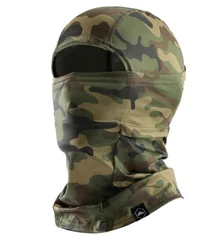 Balaclavas10 pieces · from $6.99
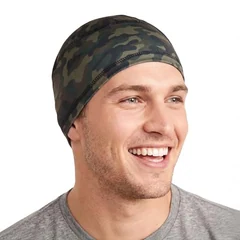 Beanies21 pieces · from $4.99
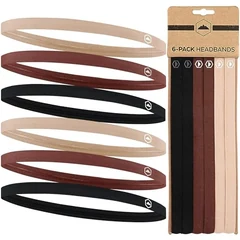 Headbands13 pieces · from $3.95
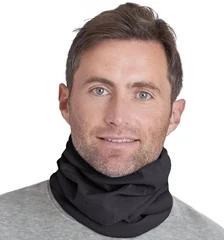 Neck gaiters6 pieces · from $5.99
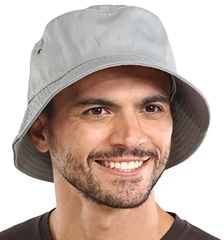 Sun hats9 pieces · from $6.99
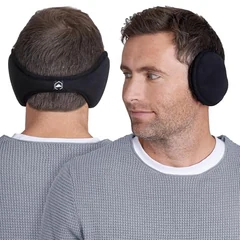 Ear warmers1 pieces · from $7.99
A hard hat sits on a suspension with a gap under it, and the cap it wants is thin and smooth with nothing at the temple.
A cycling helmet sits closer, holds by strap tension rather than by suspension, and cares most about the vents and the strap line.
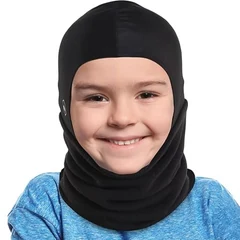
A snow helmet is closer still, usually has an ear pad, and comes out in conditions where the face needs cover too. That is the case for a hooded balaclava under a snow helmet rather than a bare skull cap.
That is why the same maker sells several thin caps rather than one. The site files them by the job named on the page, and the job filter on the shop pages is the same list.
What we will and will not claim
Balaclavas10 pieces · from $6.99
Beanies21 pieces · from $4.99
Headbands13 pieces · from $3.95
Neck gaiters6 pieces · from $5.99
Sun hats9 pieces · from $6.99
Ear warmers1 pieces · from $7.99We will tell you what the maker states, what shape the piece is, how much it covers and what it costs today. We will say when a word is resistant rather than proof.
We will not tell you that a piece is safe for a job, rated for a standard, or a substitute for equipment someone else specified. None of that is ours to say, and a hat that claimed it would be the wrong hat.
Pieces this guide is about
Everything we hold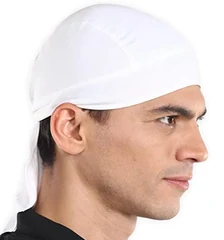
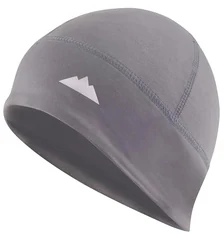
Sources
- 1910.135, Head protection, Occupational Safety and Health Administration. Read 14 September 2026.